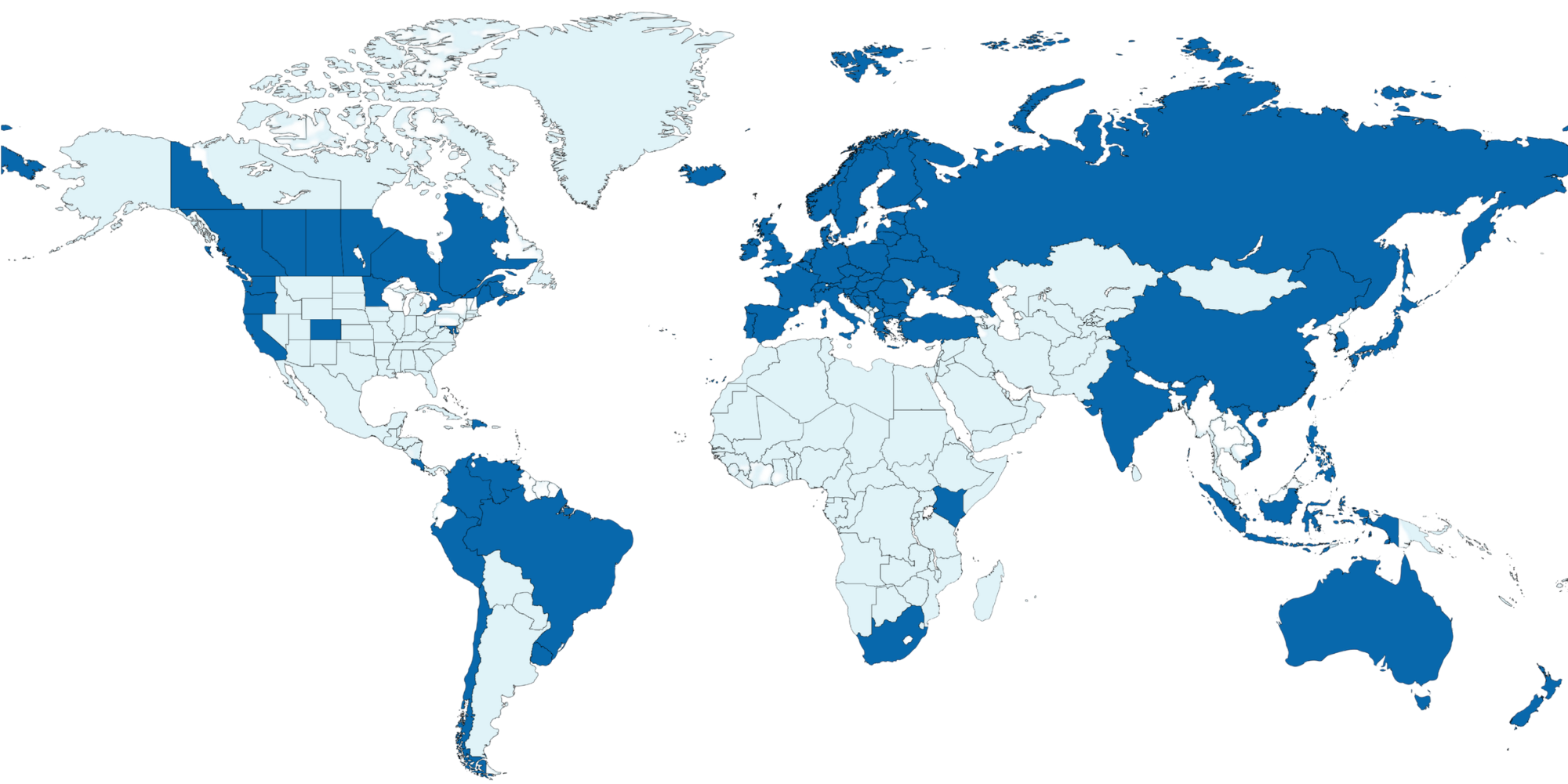
Extended Producer Responsibility (EPR) is a type of policy that holds producers accountable for the lifecycle of the packaging and products they place on the market, rather than shifting responsibility to municipalities at end-of-life. Adopted in many countries, EPR laws are designed to encourage more sustainable packaging and reduce environmental and human health impacts. Fees collected from producers are typically used to fund recycling infrastructure and community education programs.
Trayak understands EPR worldwide.
EPR Compliance with Trayak
EPR laws require all obligated producers- usually the brand owner, manufacturer, or importer- to submit annual reports detailing all of the covered materials that they sold in a given region. For each state in the US, producers must register with the designated Producer Responsibility Organization (PRO), compile the necessary data, submit a report, and then pay the associated fees. Other countries utilize similar systems, although the details of each program plan vary. Trayak’s EcoImpact Sustainability Platform makes it simple to produce these reports with ready-made templates and easy-to-use data collection.
Keeping track of obligations by state and country can be overwhelming. That’s why Trayak designed the EcoImpact Sustainability Platform.
One of the biggest challenges companies face when trying to plan for EPR compliance is how fragmented the policies are across jurisdictions. What qualifies as a covered material and who is considered the obligated producer can vary, forcing companies to keep track of a complex web of regulations and hindering their ability to develop a comprehensive reporting strategy.
Gathering and Organizing Reporting Data
Many companies face significant operational challenges in collecting, validating, and structuring the data required for reporting. Each law requires reporting a specific set of data attributes which often vary by jurisdiction. Aligning detailed product- and component-level information with sales and distribution data necessitates cross-functional coordination, making accurate and timely reporting a substantial undertaking – unless companies maintain this information in a single data system tailor-made for sustainability reporting.
AI-powered EPR Reporting
EcoImpact-EPR uses AI-powered analysis to assign reporting categories and fees to your components, saving your company time and money. Streamline your EPR reporting process without compromising on accuracy, auditability, and data integrity.
Trayak is proud to be a member of the Sustainable Packaging Data Council (SPDC), a cross-functional group of brands, technology partners, non-profits, and industry analysts in the packaging supply chain that share a goal of simplifying data collection for EPR reporting. The SPDC has published a standardized data template for reporting in Oregon, Colorado, and California that are designed to support efficiently gathering and managing packaging data while navigating supplier relationships and data quality challenges. The document includes a list of the key data attributes required for reporting and recommended best practices for data collection.